
Material Context
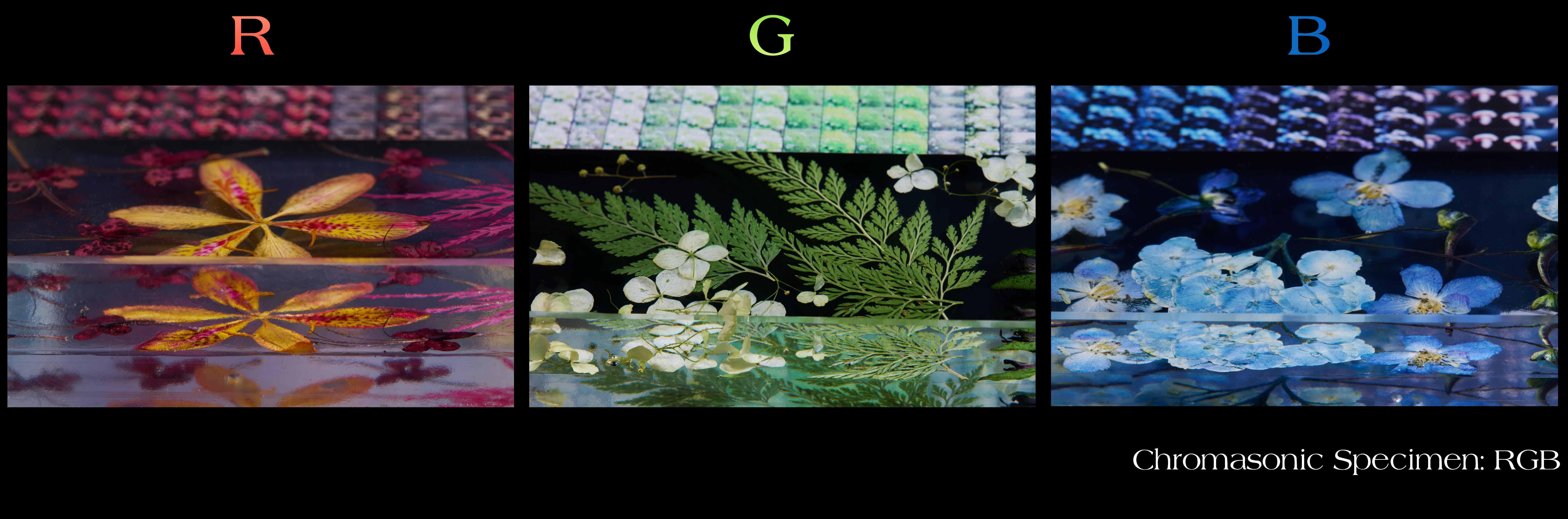
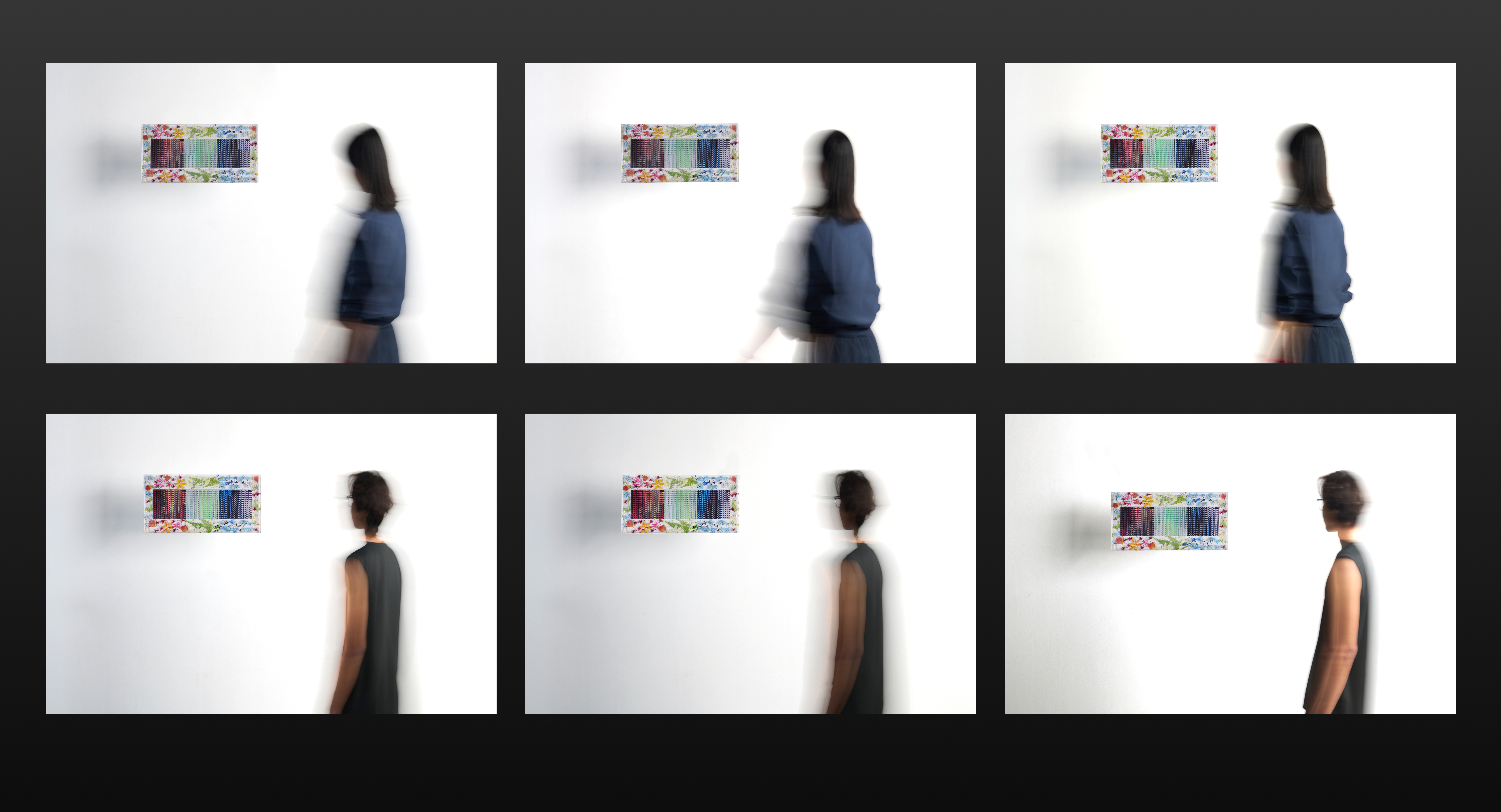
In digital media, images often remain unstable, reproducible, and endlessly transformable. This work reverses that condition by sealing generated images inside resin. The digital image becomes a physical trace, while artificial flowers and botanical fragments turn the object into a specimen box. Rather than presenting AI memory as a screen-based flow, the work treats it as something that can be archived, preserved, and viewed like a fragile biological sample.Concept

Modern generative systems learn from large visual databases. Inside these systems, words are not only text; they become keys that activate stored visual patterns. This project treats prompt language as a way to recall machine memory.
Each song is mapped to a color channel and a memory archetype. The generated images are then transformed through particle systems, motion fields, and audio-reactive effects. The result is a living environment where memory is unstable, emotional, and constantly reforming.
The term "specimen" refers to the way the work freezes generative images into a physical object, turning computational memory into something closer to an archive, fossil, or botanical sample.
Three Memory Worlds
Red · Flame

Flame represents high-speed memory intensity. It becomes pressure, rhythm, collision, destruction, and rebirth through motion.
Green · Dream

Dream represents spring-like memory. It carries growth, nostalgia, and unreal landscapes between sleep and awakening.
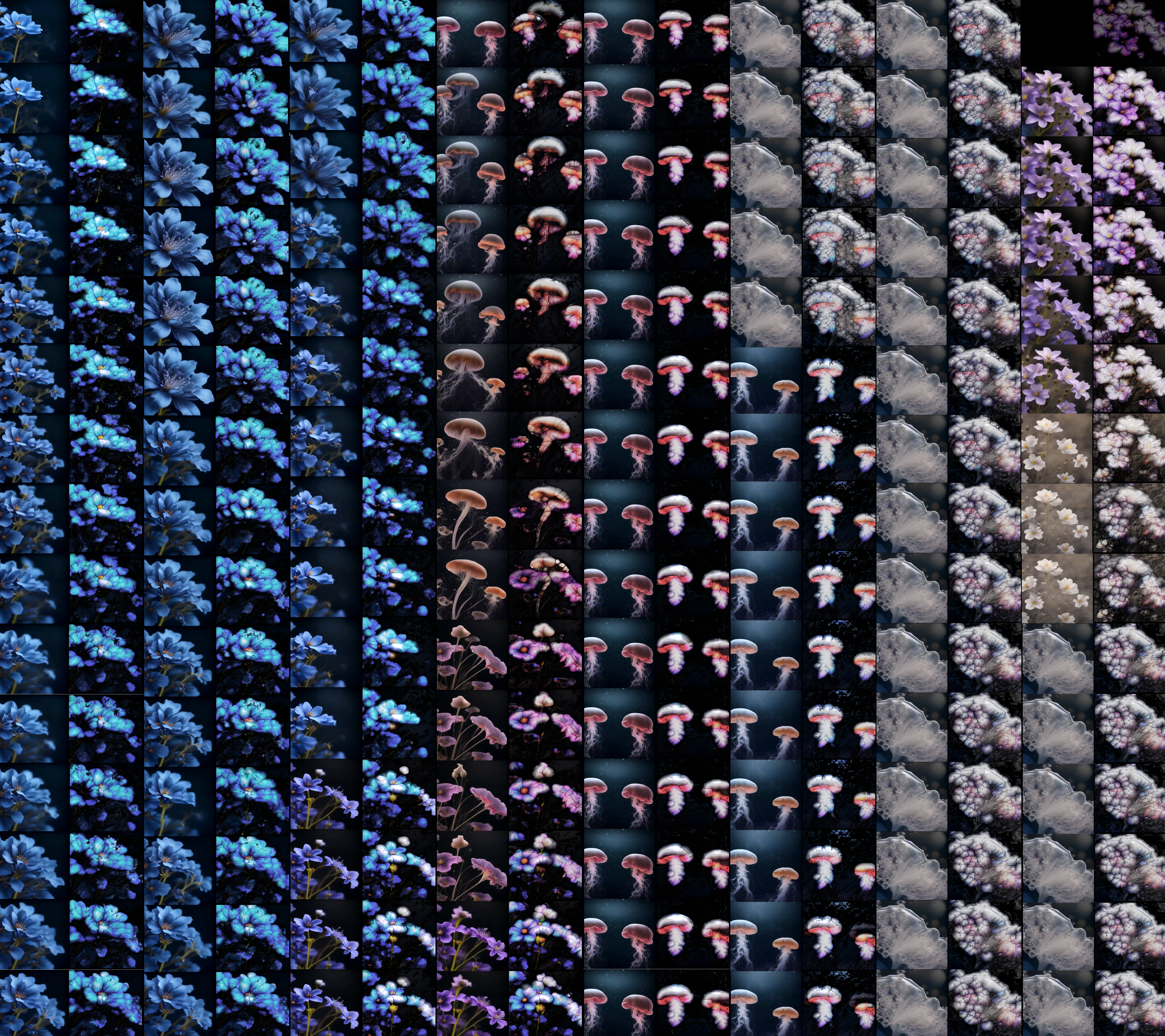
Blue · Bubble
Bubble represents soft and fragile memory. It is transparent, floating, and easy to break, like emotional fragments suspended in water or air.
Process
The work is built as a pipeline from generative words to visual memory and then to post-processed spatial experience.
Gallery For Each Song
Red · Flame — Rush E
🔴🔴🔴
Green · Dream — Spring
🟢🟢🟢
Blue · Bubble — Blue
🔵🔵🔵
Reflection
This work asks what happens when generated images leave the screen and become physical artifacts. By sealing AI-generated visual memories in resin, Chromasonic Specimen: RGB turns the fluid process of generation into a fixed object. It treats machine memory not as a stream of outputs, but as a fragile trace that can be collected, preserved, and re-read.